
Quick Navigation
- What Is Home Staging?
- Why Home Staging Works (Buyer Psychology)
- How Buyers Actually Experience a Home
- Vacant vs Furnished Homes
- Virtual Staging vs Physical Staging
- The Role of Furniture in Selling Homes
- Furniture, Flow & Function
- When Home Staging Has the Biggest Impact
- Who Uses Home Staging And Why
- Furniture Placement vs Lifestyle Staging
- Why Professional Support Matters
- FAQs About Home Staging
Selling a home isn’t just about putting it on the market it’s about how buyers experience it.
In a world where buyers scroll listings in seconds and inspect properties with higher expectations than ever, presentation has become a defining factor in sale outcomes. Buyers are no longer comparing homes solely on location and price; they’re comparing how each property makes them feel.
This is where professional home staging plays a critical role.
Home staging isn’t about trends, décor, or styling for the sake of aesthetics. It’s about strategically positioning a property to appeal to the right buyer, reduce uncertainty, and encourage confident decisions.
This guide explores what home staging really is, why it works, and how furniture, flow and feeling influence whether a property simply attracts interest or actually sells.
What Is Home Staging?
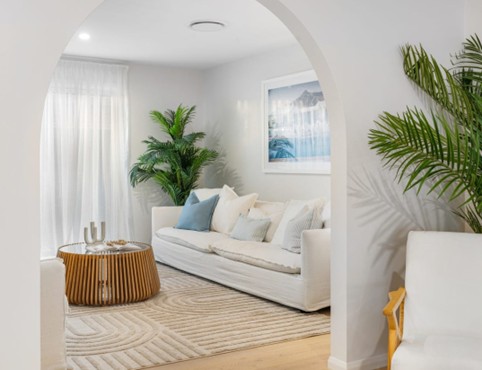
Home staging is the strategic presentation of a property using furniture, layout and styling to help buyers clearly understand how a home functions and how it could be lived in.
It is not interior design.
It is not decoration.
And it is not about personal taste.
Professional home staging focuses on:
- Defining scale and proportion
- Clarifying room purpose
- Enhancing flow between spaces
- Creating emotional connection
- Supporting the target buyer profile
A well-staged home feels intentional, balanced and easy to understand. Buyers aren’t distracted by uncertainty instead, they’re guided naturally through the space.
At its core, staging removes friction from the buying process.
Why Home Staging Works (Buyer Psychology)
Buyers like to believe they make logical decisions but the truth is, property decisions are emotion-led.
Within moments of entering a home, buyers subconsciously assess:
- Comfort
- Warmth
- Functionality
- Lifestyle alignment
- Perceived value
Logic follows emotion, not the other way around.
A staged home answers unspoken questions:
- Where would I sit?
- Will my furniture fit?
- Does this feel like home?
- Is this property worth the price?
When those questions are answered visually and emotionally, buyers relax and confident buyers make faster, stronger decisions.
How Buyers Actually Experience a Home
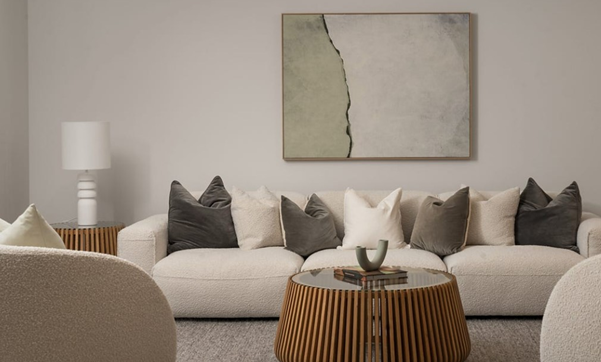
Buyers don’t walk through homes like professionals do. They don’t analyse floor plans, measure rooms in their head or imagine walls being moved.
Instead, buyers experience homes holistically.
They notice:
- How light moves through the space
- Whether rooms feel usable
- How easily they can picture daily life
- Whether the home feels welcoming or awkward
When a home is empty or poorly presented, buyers must mentally fill in the gaps. That mental effort creates hesitation and hesitation reduces urgency.
Staging removes that mental load.
Vacant vs Furnished Homes: What Buyers Really See
Vacant homes are common, but they present a challenge many sellers underestimate.
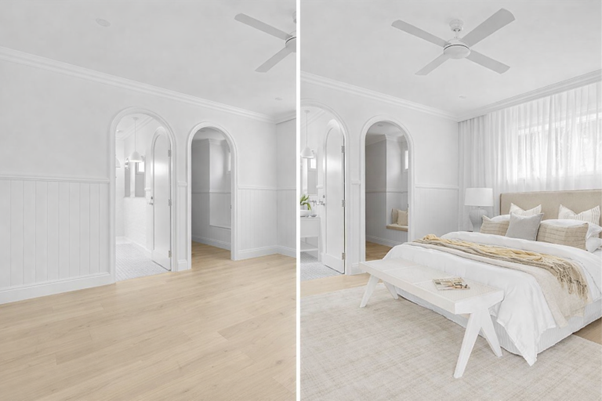
Without furniture:
- Rooms often feel smaller
- Ceiling heights are harder to gauge
- Layouts feel ambiguous
- Flow between spaces becomes unclear
- Emotional warmth is absent
Furniture provides visual reference points. It anchors rooms and shows buyers how spaces function in real life.
A sofa defines a living zone.
A dining table demonstrates capacity.
A bed establishes proportion and purpose.
Without these cues, buyers guess and guessing introduces doubt.
Virtual Staging vs Physical Staging
Virtual staging has become increasingly popular, particularly for online listings and quick marketing campaigns. It can be a useful tool when timeframes or budgets are tight.
However, virtual staging and physical staging serve different roles.
Virtual staging is effective for:
- Enhancing listing photos
- Helping buyers understand potential layouts
- Supporting online marketing
Physical staging is effective for:
- Inspections
- Emotional connection
- Building trust between photos and reality
- Creating consistency across marketing and open homes
Virtual staging shows what could be.
Physical staging allows buyers to experience what already is.
When buyers attend inspections expecting one experience and receive another, trust erodes. Physical staging eliminates that gap, ensuring the home delivers exactly what buyers expect and more.
The Role of Furniture in Selling Homes
Furniture is not filler. In professional staging, furniture is a communication tool.
Every piece serves a purpose:
- Establishing scale
- Guiding movement
- Highlighting architectural features
- Supporting lifestyle narratives
Well-selected furniture never overwhelms a space. Instead, it enhances clarity.
This is why professional stylists supported by specialised furniture hire partners consistently outperform ad hoc or DIY approaches. The goal isn’t to impress buyers with décor; it’s to help them feel confident and emotionally invested.
Furniture, Flow & Function
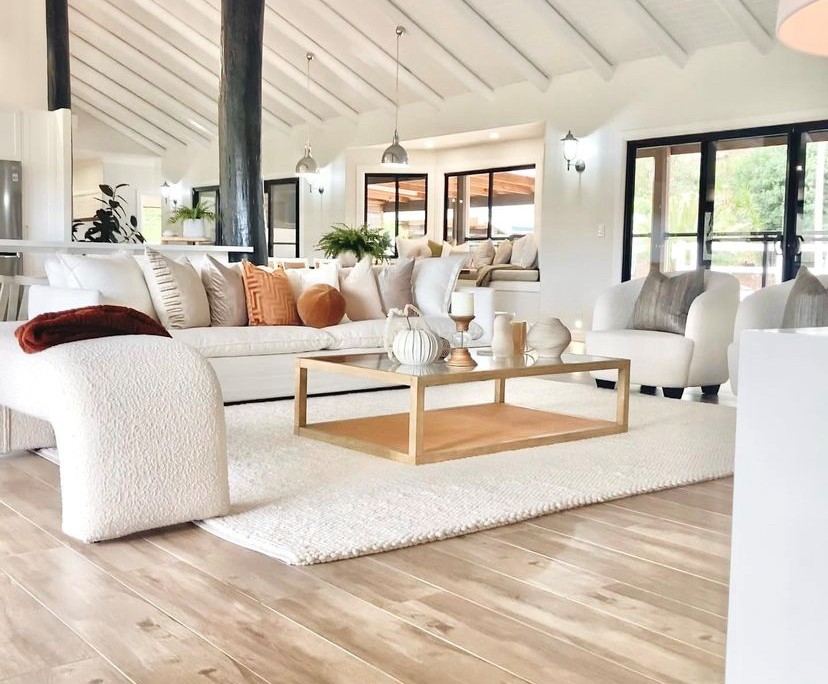
Flow refers to how buyers move through a home physically and emotionally.
Effective staging ensures:
- Clear pathways
- Logical transitions between rooms
- Balanced proportions
- No visual bottlenecks or confusion
Function matters just as much as appearance. Buyers need to immediately understand:
- Where they would eat
- Where they would relax
- Where they would work or sleep
When function is unclear, buyers hesitate. When it’s obvious, buyers feel comfortable and comfort leads to confidence.
When Home Staging Has the Biggest Impact
While staging adds value in most scenarios, it is particularly powerful when:
- A property is vacant
- The layout is unconventional
- The market is competitive
- Buyers are emotionally driven (families, upsizers)
- Price positioning relies on perceived value
In these cases, staging doesn’t just enhance presentation it actively reduces objections and resistance.
Who Uses Home Staging And Why
Real Estate Agents
Agents use staging to:
- Differentiate properties
- Support price conversations
- Reduce days on market
- Improve buyer engagement at inspections
Developers & Sellers
Developers and sellers use staging to
- Deliver lifestyle-led outcomes
- Scale their business efficiently
- Maintain consistency across projects
- Focus on design rather than logistics
Professional Stylists
Stylists use staging to:
- Elevate perceived value
- Create emotional appeal
- Improve buyer confidence
- Maximise marketing effectiveness
In every case, staging supports outcomes, not just aesthetics.
Furniture Placement vs Lifestyle Staging
Placing furniture fills rooms.
Lifestyle staging tells a story.
Lifestyle staging considers:
- Who the buyer is
- How they live
- What they value
- How they’ll use each space
That story is what buyers remember and what differentiates one property from another in a crowded market.

Why Professional Support Matters
Successful staging outcomes are rarely accidental.
They’re the result of collaboration between:
- Agents who understand buyer behaviour
- Stylists who design with intent
- Furniture hire partners who deliver quality, reliability and logistics expertise
When these elements align, staging feels effortless and buyers respond accordingly.
For Professional Stylists
If you’re a stylist looking to scale without holding excess inventory, working with a staging focused furniture hire partner allows you to:
- Access curated, professional-grade furniture
- Maintain consistency across multiple projects
- Rely on dependable delivery and logistics
- Focus on creative outcomes, not storage or transport
Frequently Asked Questions About Home Staging
Does home staging really help sell homes?
Yes. Professionally staged homes consistently attract stronger buyer engagement, longer inspections and higher emotional connection, all of which support faster sales and stronger offers.
Is virtual staging enough?
Virtual staging can enhance online listings, but it doesn’t impact inspections. Physical staging creates emotional connection and trust, which are critical during buyer walkthroughs.
Do agents need a stylist to stage a property?
Not always. Some agents work directly with furniture hire partners, while others collaborate with professional stylists. What matters most is the quality and intent behind the presentation.
Is home staging worth the cost?
Staging is an investment in perception. By improving how buyers experience a home, it often reduces time on market and price resistance outcomes that typically outweigh the upfront cost.
What’s the difference between furniture hire and buying furniture?
Furniture hire provides flexibility, professional-grade pieces and logistics support without the capital, storage and maintenance costs of owning furniture.
Final Thought
Home staging works because it speaks the buyer’s language emotion, clarity and confidence.
When buyers can feel themselves living in a space, decisions happen faster and with greater certainty.
And in property, certainty sells.