
Quick Navigation
- Why Vacant Homes Are Harder for Buyers to Connect With
- Why Empty Rooms Often Feel Smaller
- Why Vacant Homes Feel Emotionally Cold
- Why Buyers Spend Less Time in Vacant Homes
- Vacant Homes vs Staged Homes: The Competitive Difference
- Vacant Home Selling Tips That Improve Results
- How Furniture Improves Buyer Confidence
- When Vacant Homes Are Most at Risk of Underperforming
- The Key Insight: Buyers Purchase Experiences, Not Just Properties
- Frequently Asked Questions About Selling Vacant Homes
Selling a vacant home may seem straightforward. Without furniture, the property appears clean, neutral, and ready for immediate inspection. But in practice, vacant homes often take longer to sell and struggle to generate the same level of buyer engagement as professionally presented properties.
The reason isn’t the property itself it’s how buyers experience it.
As explored in our pillar guide, The Complete Guide to Home Staging That Actually Sells Homes, buyers don’t just evaluate homes based on size or layout. They respond emotionally to how a space feels. When those emotional cues are missing, buyers hesitate.
Understanding why vacant homes underperform and applying proven vacant home selling tips can significantly improve buyer perception and sales outcomes.
Why Vacant Homes Are Harder for Buyers to Connect With
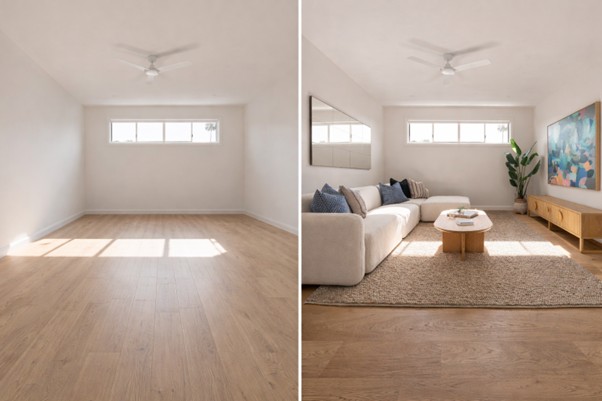
When buyers walk into a vacant home, they are presented with structure but not context.
There are no visual anchors to demonstrate:
- How large the living area really is
- Where furniture would sit
- How the room would function day-to-day
- Whether their lifestyle fits comfortably within the space
Instead of experiencing the home naturally, buyers must mentally construct how it would work.
This mental effort creates friction.
The easier a home is to understand, the more confident buyers feel. The harder they must work to visualise it, the more uncertainty enters the decision-making process.
Vacant homes increase uncertainty.
Why Empty Rooms Often Feel Smaller Than They Are
One of the most overlooked challenges of selling a vacant home is the lack of scale reference.
Furniture provides proportion. Without it, buyers struggle to accurately judge room size.
For example:
- A living room without a sofa may feel narrow
- A bedroom without a bed may feel undersized
- A dining area without a table may feel impractical
Furniture helps define usable space.
It shows buyers how the room functions in reality, not just in theory.
Without these cues, buyers may underestimate the home’s true capacity and usability.
Why Vacant Homes Feel Emotionally Cold and Less Inviting
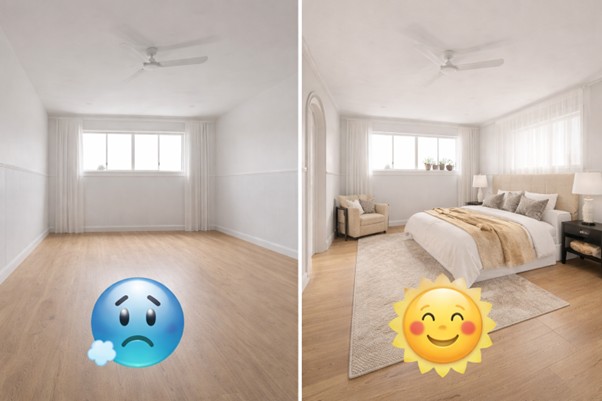
Buying a home is rarely a purely logical decision. Emotional connection plays a significant role.
Vacant homes often feel:
- Less welcoming
- Less comfortable
- Less memorable
- Less complete
Furniture softens a space. It introduces warmth, texture, and familiarity.
It transforms a property from a structure into a home.
Without these emotional elements, buyers may admire the property but fail to form a meaningful connection.
And emotional connection drives buyer motivation.
Why Buyers Spend Less Time in Vacant Homes
Inspection behaviour is a critical factor in selling success.
Buyers naturally spend more time in homes that provide visual interest and lifestyle cues.
In vacant homes, there are fewer elements to engage with. Buyers walk through quickly, form a general impression, and leave.
Staged homes, by contrast, encourage buyers to pause, explore, and imagine themselves living there.
The longer buyers spend in a home, the stronger their emotional investment becomes.
Vacant homes miss this opportunity.
Vacant Homes vs Staged Homes: The Competitive Difference
When buyers view multiple properties, presentation becomes a deciding factor.
Staged homes stand out because they feel:
- Intentional
- Functional
- Liveable
Vacant homes can feel unfinished by comparison.
Even when two properties are structurally identical, the staged home will often feel more valuable and memorable.
This difference in perception can influence buyer preference and decision-making.
Vacant Home Selling Tips That Improve Results
While vacant homes face unique challenges, there are effective strategies to improve buyer engagement and sales performance.
1. Provide Visual Context Through Presentation
Buyers need visual cues to interpret space.
Furniture demonstrates scale, function, and usability.
Providing this context makes it easier for buyers to understand how the home supports their lifestyle.
2. Define Each Room’s Purpose Clearly
Undefined rooms create uncertainty.
Is it a study? A second living area? A guest bedroom?
Buyers should immediately understand how each space can be used.
Clear function increases buyer confidence.
3. Improve Flow and Spatial Clarity
Furniture helps guide movement through a home.
It creates natural pathways and balanced proportions.
This improves the overall experience and makes the home feel more cohesive.
4. Support Emotional Connection
Emotion drives decisions.
When buyers feel comfortable and connected to a home, they are more likely to make confident offers.
Presentation plays a key role in shaping that emotional response.
5. Ensure Consistency Between Marketing and Inspection
Buyers expect the in-person experience to match what they saw online.
Providing a complete and consistent presentation builds trust and reinforces positive perception.
How Furniture Improves Buyer Confidence
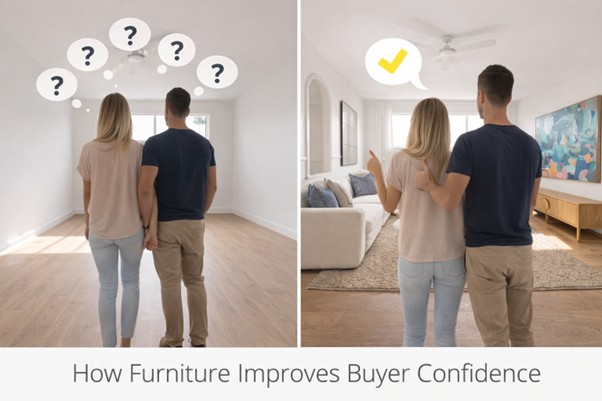
Furniture reduces ambiguity.
It answers questions buyers may not consciously realise they are asking:
- Will my furniture fit?
- Is this space practical?
- Does this home feel comfortable?
When buyers feel confident, hesitation decreases.
Reduced hesitation leads to faster and stronger decisions.
This is why professionally presented homes often generate stronger engagement.
When Vacant Homes Are Most at Risk of Underperforming
Vacant homes are particularly vulnerable when:
- The layout is unconventional
- The market is competitive
- Buyers have multiple options
- The home relies on emotional appeal
- Room purpose is not immediately obvious
In these situations, presentation has a significant impact on buyer perception.
The Key Insight: Buyers Purchase Experiences, Not Just Properties
Vacant homes present structure.
Presented homes deliver experience.
Buyers remember how a home made them feel.
Providing clarity, warmth, and visual context helps buyers move from interest to emotional investment.
Reducing uncertainty increases confidence — and confident buyers make decisions faster.
Frequently Asked Questions About Selling Vacant Homes
Do vacant homes sell slower?
Yes, vacant homes often take longer to sell because buyers struggle to visualise scale, function, and lifestyle without furniture.
Is it better to sell a home empty or staged?
Staged homes typically perform better because they provide visual clarity and emotional connection, which helps buyers engage more confidently.
Why do buyers prefer furnished homes?
Furniture helps buyers understand space quickly and imagine living there, which reduces hesitation and improves decision-making.
What are the best vacant home selling tips?
Providing visual context, defining room function, improving flow, and supporting emotional connection are key strategies to improve vacant home performance.
Related Reading
For a deeper understanding of how presentation influences buyer behaviour, read:
The Complete Guide to Home Staging That Actually Sells Home
This guide explains how staging, furniture, and layout influence buyer perception and sales outcomes.