
How Top Stylists Respond When Clients Ask the Difficult Questions
Introduction
When a client hesitates at your quote, the conversation that follows either wins the job or loses it. Not because of price objection, but because of how confidently and clearly you respond.
The best stylists in the business don’t improvise these moments. They have a playbook with practised language. A calm, evidence-backed response ready for every version of “this is expensive.”
This is that playbook.
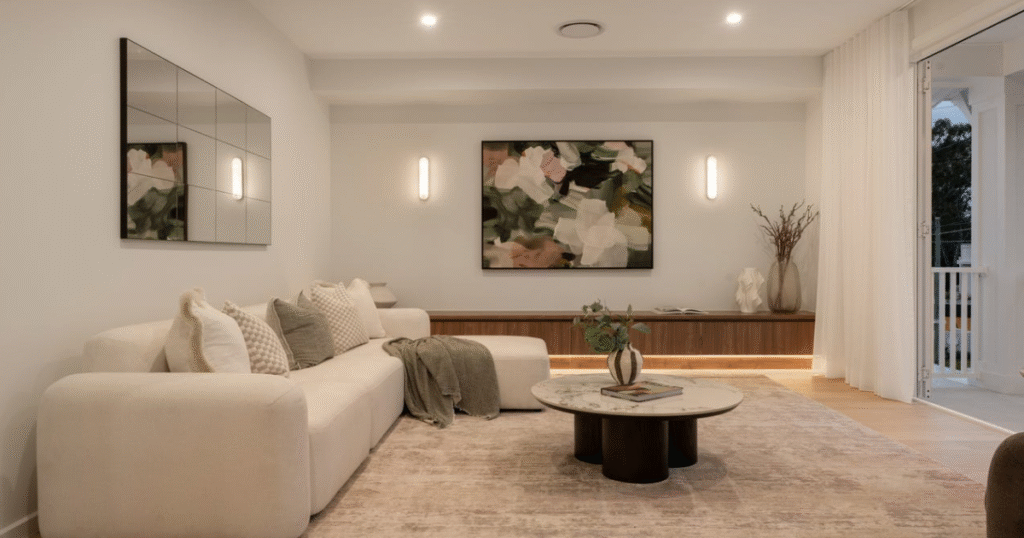
“Can’t I just do it myself?”
This is the most common price objection in residential property styling.
It’s also the most important one to answer well, because the subtext isn’t really “I can do this”, it’s “help me understand why you’re worth it”.
What they’re really asking:
Is professional styling meaningfully different from what I could pull together, with what I already own and a trip to a homewares store?
What top stylists say:
“Absolutely, and many sellers do. What we bring is access to commercial furniture collections, pieces specifically selected for photography scale and spatial proportion, combined with the experience of knowing which buyer profile is most likely to walk through that door, and styling to meet them. Most DIY staging reads as personal, ours reads as aspirational.”
The script-ready version:
“It’s a great question, and it’s completely valid to consider it. The honest difference is access and alignment. Our premium furniture collection is built for property campaigns, both physically and digitally, with the right scale, proportion, and finish quality. More importantly, we’re not staging for you, we’re staging for your buyer. That’s a different lens entirely, and it’s one we’ve developed across hundreds of campaigns.”
Our Supporting Data
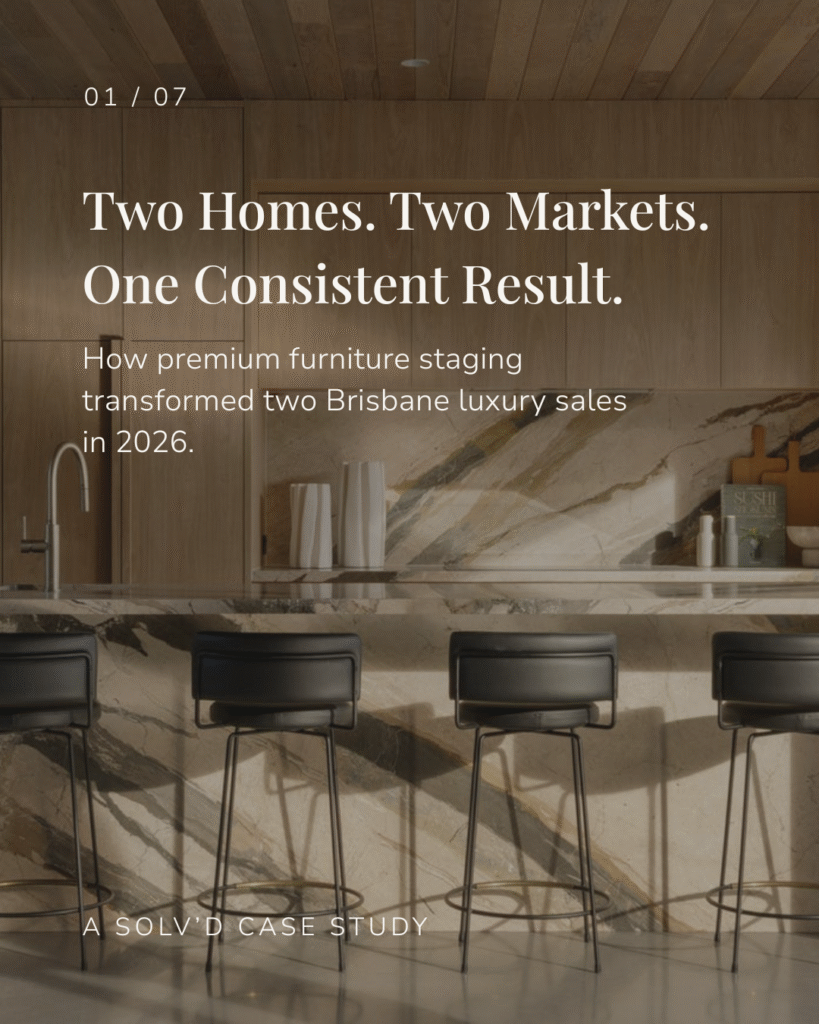
In both the Bardon and Coorparoo case studies (Brisbane, 2026), the presentation created buyer emotional certainty at first inspection, something that directly translated to auction competition and days-on-market compression. These outcomes were supported by premium furniture hire and expert styling.
“Staging is too Expensive.”
This is a price objection dressed as a value statement. The client isn’t saying “I won’t pay this.” They’re saying “I haven’t yet connected this cost to a return.”
Your job isn’t to discount. It’s to reframe the conversation around outcomes.
What they’re really asking:
Is the cost justified by what I’ll actually get?
What top stylists say:
“I always reframe staging as a line item in the campaign budget, not a personal expense. If we’re talking about a $2M property, staging at $10,000–$20,000 is less than 1% of the home’s value, which helps secure a 5-10% higher sales price. The question isn’t whether it’s expensive, it’s whether it performs. And the data says it does.”
The script-ready version:
“I understand it’s a real cost, and it should feel like a decision, not a given. The way I think about it: we’re not decorating a home, we’re investing in a sales campaign. For most properties in this price range, the styling fee represents less than 1% of the sale price. If it compresses your time on market by even two weeks, or drives competition by just one more emotionally connected buyer, this protects your premium asking price. The return is measurable many times over.”
The reframe that closes this objection:
Ask them: “What would one extra week on market cost you, in holding costs, mortgage repayments, and stress?” Let that number sit. Then compare it to your quote.
“The agent said we don’t need it.”
This one is tricky, because it introduces a conflicting authority with someone the client already trusts.
Handled poorly, it sounds defensive. Handled well, it positions you as the specialist voice on presentation, not as someone competing with the agent.
What they’re really asking:
Should I trust you or the agent?
What top stylists say:
“I respect that, and great agents know their market. My role is different; I’m not advising on pricing strategy, I’m helping to protect it. I’m advising on the gap between what a property is and what a buyer feels when they walk in. Those are two different disciplines.”
The script-ready version:
“Your agent is the right person to guide you on pricing, timing, and negotiation, that’s their expertise. Mine is the presentation layer: how the home reads at first inspection, online, and in photography. In my experience, the properties that generate the most competition are the ones where both of those disciplines are working together. I make sure the home lives up to the premium price you’re chasing.”
“We’ve already renovated / The home presents well on its own.”
A well-renovated home is a wonderful thing. It’s also frequently over-estimated by the people who love it. This objection requires you to validate the work without undermining your value.
What they’re really asking:
Are you telling me our beautiful renovation isn’t enough?
What top stylists say:
“The renovation is the foundation, it’s real value. What staging does is amplify it. An empty or under-furnished renovation makes buyers mentally calculate what they’d need to spend to ‘finish’ it. Studies show buyers have trouble visualising undefined spaces. Staging assigns clear purpose, and replaces doubt with desire.”
The script-ready version:
“The renovation gives us an incredible canvas. Genuinely, it makes our job more exciting. Here’s the thing: buyers are making an emotional decision first and a rational one second. An unfurnished renovation, however beautiful, asks them to do the imaginative work themselves. Our job is to do that work for them, so they walk in and feel like they’re already home. That emotional connection converts inspections into strong offers.”
The Psychology behind this:
Contrary to popular belief, vacant spaces often appear smaller, not larger than their true dimensions. Research consistently shows that furnished spaces are perceived as larger, more finished, and more valuable than identical empty spaces. This is Buyer Psychology.
“What’s the ROI? Can you prove it?”
The sophisticated version of every price objection above.
This client has done their research, or thinks in investment terms.
They want data, not emotion. Give them both.
What they’re really asking:
Show me the numbers.
What top stylists say:
“I can share case studies, but I’ll always approach them honestly. Every property is different, and I won’t promise an outcome. What I can tell you is the strategy: staging reduces buyer uncertainty, and reduced uncertainty is what drives competition. Competition is what moves price.”
The script-ready version:
“In all honesty, giving you a guaranteed ROI figure, would be a disservice, as the market is always a variable. What I can share is the consistent pattern: professionally staged properties in comparable markets have dramatically outperformed unstaged equivalents on both price and time, in the data we track. More importantly, I can explain the strategy, because understanding why it works is more useful than a headline number. Do you want me to walk you through it?”
A SOLV’D CASE STUDY
Two Properties | Two Outcomes | One Consistent Insight
Bardon ($5.8M+ achieved against a $3.8–4.8M estimate) and Coorparoo (~5 days vs a 20–35 day suburb benchmark) are exactly the kind of attributed, specific data points that answer price objection with credibility.
The Principle Underneath the Questions
Every price objection is a lack of trust in disguise. The client isn’t arguing about money, they’re asking you to make them feel certain.
The best stylists respond to that feeling, not the surface question. They validate the concern, tell the truth about what staging does and doesn’t guarantee, and then redirect to the outcome the client actually cares about: selling well, selling fast, and leaving the campaign without regret.
Price will always be a conversation. Confidence in that conversation is what separates the stylists who grow their business from the ones who keep discounting theirs.
Win the Conversation.
Win the Campaign.
The language you use when a client pushes back is just as important as the styling itself. We work closely with stylists, agents, and developers across Brisbane and South East Queensland to provide premium furniture solutions that give every campaign the best possible foundation.
If you’re building your staging business and want a furniture partner who understands the value conversation as well as you do, we’d love to connect!
Frequently Asked Questions About Commercial Furniture Hire
Who typically uses furniture hire services?
Furniture hire is commonly used by property stylists, real estate agents, developers, photographers, production companies, event organisers and property investors.
Is furniture hire only for home staging?
No. While home staging is one of the most common uses, furniture hire is also used for film production, marketing shoots, rental properties and events.
Is hiring furniture cheaper than buying it?
For short-term use, hiring furniture is usually far more cost-effective than purchasing it, especially when transport, storage and styling changes are considered.
Where is furniture hire most common in Queensland?
Furniture hire is widely used across Brisbane, Gold Coast, Sunshine Coast and Toowoomba, particularly in property marketing and creative industries.
Related Reading
Want to see these principles in action? The full Bardon and Coorparoo case studies are available: https://solvd.com.au/premium-furniture-staging-case-study/
Two Brisbane luxury homes, two very different markets, and the data behind both results.