Solv'd

Solv'd

  • Latest News
  • Services
    • About Us
    • Our Services
    • For Airbnb
    • Our Team
  • Help
    • How To Order
    • FAQs
    • Contact
  • My account
  • Member Login
  • Quick Quote

Luxury Staging Campaign Differentiation

June 5, 2026

How to Position a Premium Campaign as a Property Stylist


Introduction

Here’s the conversation every stylist working in luxury staging has had at least once.

You present your proposal. The client listens, nods, and then says something like: “We staged our home last time and it looked great. What’s different about luxury staging?“

Your job, at that moment, is not to justify your price. It’s to shift the frame entirely. The gap between standard staging and luxury staging isn’t a question of taste, it’s about providing the best outcomes for homes in the premium market. Once your client understands that distinction, the conversation stops being about cost and starts being about strategy.

This article gives you the language and the logic to make that shift.


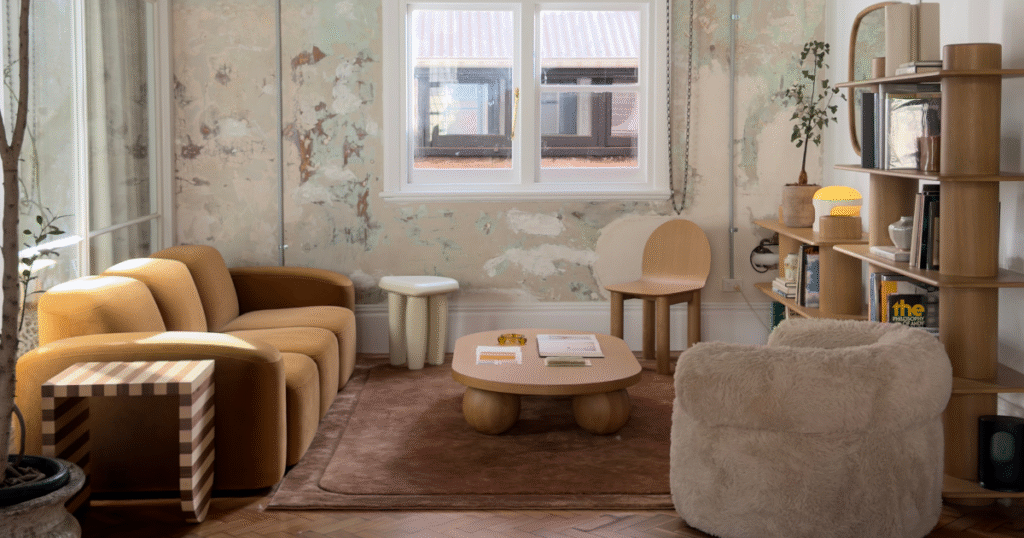
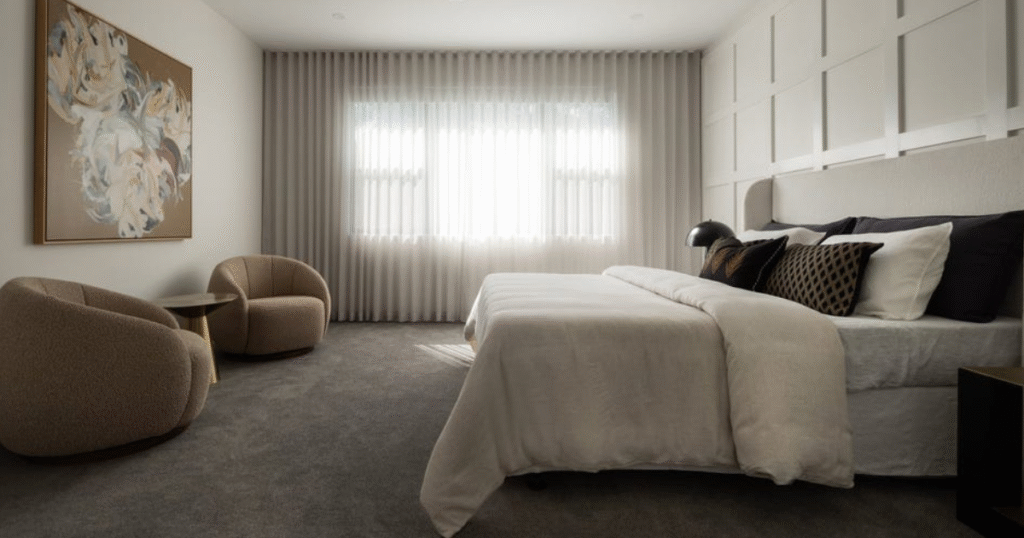
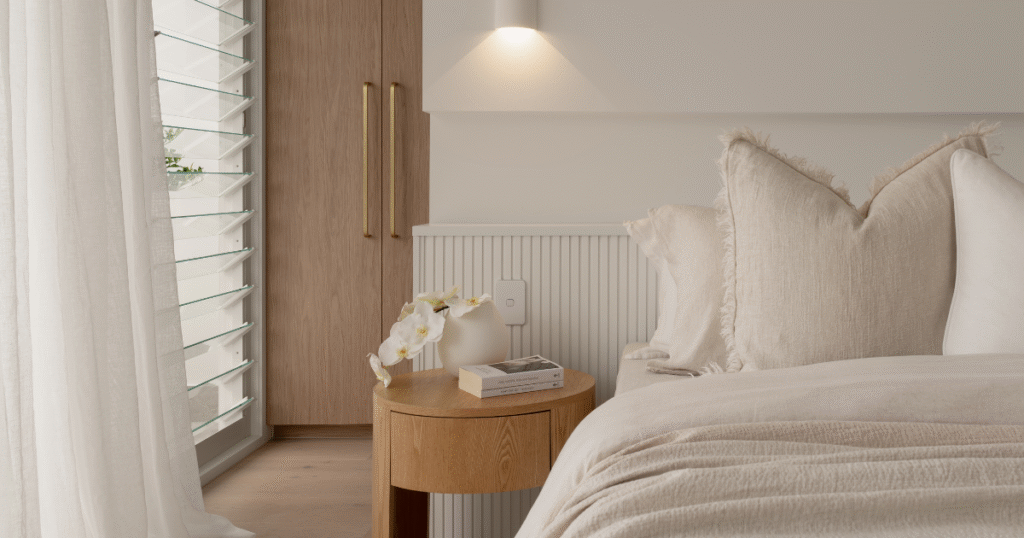
Bedroom inspo in neutral tones, mixed with soft texture through luxury staging to elevate the home.

What Clients think Staging is


Most clients, even experienced ones who have sold before, carry a relatively simple mental model of what staging does. In their mind, it’s a presentation tool. It makes the home look nicer for photos. It helps buyers imagine living there. It’s a finishing touch before the campaign begins.

That framing isn’t necessarily wrong, but it’s incomplete in a way that consistently costs clients money.

It treats staging as aesthetic and ignores staging as psychology. It assumes the goal is to make the home look good, rather than to engineer a specific buyer response.

Most importantly, this framing leads clients to evaluate staging proposals the way they’d evaluate any service: what’s the minimum I need to spend to get an acceptable result?

Your role is to replace that model with a more accurate one.


The “Good Enough” Trap


Standard staging can often involve volume furniture, template layouts, and pieces selected for availability, which improves a homes presentation for mass appeal. The home photographs reasonably well, empty rooms have furniture in them and buyers can orient themselves. It’s a great budget option for entry-level homes.

But good and strategic are very different things at the premium end of the market.

Standard staging removes any negatives. It eliminates the visual problem of emptiness, personal clutter and lack of flow, making it easier for prospective buyers to move through the home with purpose.

Luxury staging is strategically orchestrated to generate a specific emotional experience, that wasn’t there before. When interiors align with buyers self-image or aspirational identity, the space stops feeling like a property and starts feeling like a possibility.

That experience is what drives competition between buyers. Competition is what drives price.

A buyer who has a strong emotional response to a home on Saturday morning will still be thinking about it on Sunday night.

A buyer who had a pleasant but neutral experience at the same property will have largely filed it alongside the three others they inspected that day.


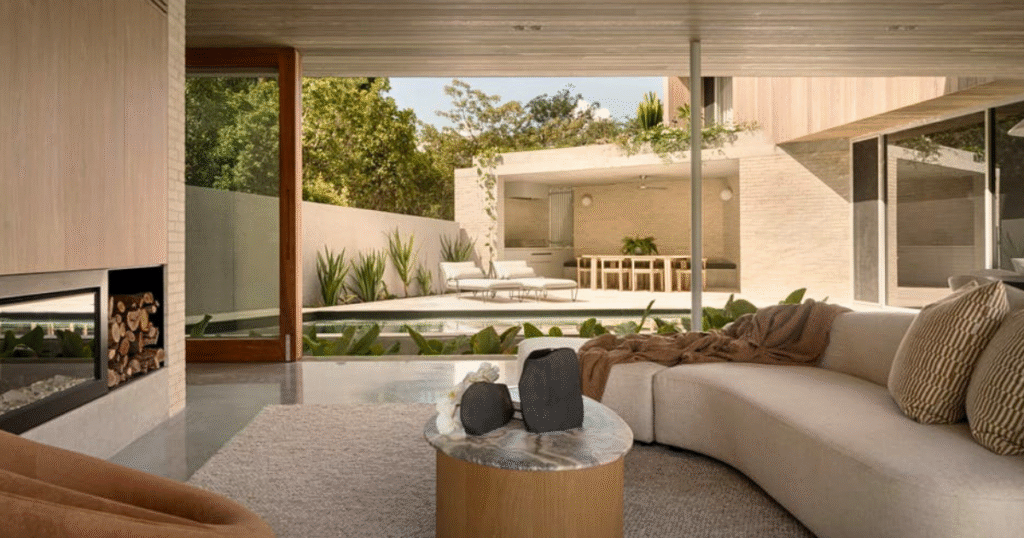
Brisbane architectural home achieving multi-million dollar prestige status through luxury staging and premium furniture hire.

What actually separates Luxury Staging from Standard Staging


Here are the key differences that set apart luxury staging services from standard home staging and how these points win jobs in the premium market.

Furniture Scale and Proportion

Commercial premium furniture is selected and scaled for property photography and spatial impact, less so for comfortable domestic use. A standard sofa fills a space, where a considered luxury piece defines it. It communicates the scale of the room, anchors the layout, and creates a focal point that draws the eye, specifically in photography.

Photography Performance

Luxury furniture hires are built for camera. The materials such as the weave of a fabric, the finish of a stone top, or the depth of a timber, read differently on a professional camera lens, than budget alternatives do. This can be the difference between a listing that stops a buyer mid-scroll and one they move past.

In a market where the first impression happens online, photography performance defines the digital campaign.

Perceived Finish Quality

One of the most consistent effects of premium staging is that it lifts the perceived finish quality of the property itself, independently of what was actually built or renovated. A luxury furniture selection complements and elevates the architecture around it. Standard staging can inadvertently do the opposite, drawing attention to the limitations of a space, rather than its potential.

This effect is particularly pronounced in new builds and high-end renovations, where the gap between what was spent and what buyers perceive can be significant either way. To achieve the best outcomes, the presentation must align with the prospective buyer demographic, and their expectations.

Buyer Profile Alignment

Standard staging presents a room. Luxury staging presents a life. Every piece, every layer, every styling decision is made with a specific buyer in mind, including their aspirations, their status signals, and their lifestyle reference points.

At a $2M+ price point, buyers are not evaluating whether a home is liveable. They’re evaluating whether it reflects who they are, or who they want to be. Furniture that doesn’t speak to that identity is, at best, invisible. At worst, it actively undermines the perceived value of the property and doesn’t meet their expectations of a home within the asking price bracket.

It is critical, in this sense, to ensure presentation matches and elevates the architecture.

Premium property, premium experience.


How to Position Luxury Staging to a Client


Some phrases work consistently well in client conversations to bridge understanding, at the premium end. Particular wording, however accurate it may be, generates resistance. Here’s a quick reference for your next conversation:

Instead of: “Our furniture is higher quality.”

Try: “Our pieces are selected for how they perform on camera and how they read in person at this price point.”

Instead of: “Standard staging won’t be enough for this home.”

Try: “This home has a lot to offer. The question is how much of that we put in front of buyers on day one. We know first impressions matter, and at this level, a buyer’s initial expectations must be met or exceeded, from the moment they walk through the door.“

Instead of: “You get what you pay for.”

Try: “The difference isn’t really about price, it’s about the brief and our goals. Standard staging solves a presentation problem. What we do is build a buyer experience. These are different starting points.”

Instead of: “Trust me, it makes a difference.”

Try: “Let me show you two campaigns side by side and walk you through what I’m seeing.”


When Clients Still Push Back:


Even with the best framing, some vendors will hold the line. Usually this means one of three things: the budget is genuinely constrained, they’ve had a previous experience that didn’t justify the cost, or they haven’t yet made the emotional connection between presentation quality and their personal financial outcome.

We explore common objections and how to handle them in The Price Objection Playbook.


Learn More

Closing the Conversation


The clients most likely to choose premium staging are not necessarily the ones with the biggest budgets. They’re the ones who understand (or who you help understand), that the campaign is a commercial exercise, not a personal one.

When a client grasps that staging is a conversion tool between their property’s potential and a buyer’s certainty, the decision comes down to which approach is most likely to deliver on their goals.

During a pitch or consultation, your objective should not be to convince them to spend more, but to help them understand the outcomes they are choosing between.

Once they have that clarity, most premium vendors naturally make a decision that aligns with their goals.


Ready to elevate your next campaign?

We work closely with stylists, agents, and developers across Brisbane and South East Queensland to provide premium commercial furniture solutions built for high-performance property campaigns.

If you’re presenting a luxury property to market and want a furniture partner who understands the vendor conversation as well as the styling brief, we’d love to be involved.

Contact Us →

  • Instagram
  • Facebook
  • LinkedIn

Frequently Asked Questions About Commercial Furniture Hire

Who typically uses furniture hire services?

Furniture hire is commonly used by property stylists, real estate agents, developers, photographers, production companies, event organisers and property investors.


Is furniture hire only for home staging?

No. While home staging is one of the most common uses, furniture hire is also used for film production, marketing shoots, rental properties and events.


Is hiring furniture cheaper than buying it?

For short-term use, hiring furniture is usually far more cost-effective than purchasing it, especially when transport, storage and styling changes are considered.


Where is furniture hire most common in Queensland?

Furniture hire is widely used across Brisbane, Gold Coast, Sunshine Coast and Toowoomba, particularly in property marketing and creative industries.

Related Reading

Want to see these principles in action? The full Bardon and Coorparoo case studies are available: https://solvd.com.au/premium-furniture-staging-case-study/

Two Brisbane luxury homes, two very different markets, and the data behind both results.

Filed Under: News Tagged With: brisbane, commercial furniture hire, furniture hire, gold coast, home staging, luxury homes, million dollar listing, premium furniture hire, prestige property, property styling, real estate

The Price Objection Playbook

May 26, 2026

How Top Stylists Respond When Clients Ask the Difficult Questions


Introduction

When a client hesitates at your quote, the conversation that follows either wins the job or loses it. Not because of price objection, but because of how confidently and clearly you respond.

The best stylists in the business don’t improvise these moments. They have a playbook with practised language. A calm, evidence-backed response ready for every version of “this is expensive.”

This is that playbook.


“Can’t I just do it myself?”


This is the most common price objection in residential property styling.

It’s also the most important one to answer well, because the subtext isn’t really “I can do this”, it’s “help me understand why you’re worth it”.

What they’re really asking:

Is professional styling meaningfully different from what I could pull together, with what I already own and a trip to a homewares store?

What top stylists say:

“Absolutely, and many sellers do. What we bring is access to commercial furniture collections, pieces specifically selected for photography scale and spatial proportion, combined with the experience of knowing which buyer profile is most likely to walk through that door, and styling to meet them. Most DIY staging reads as personal, ours reads as aspirational.”

The script-ready version:

“It’s a great question, and it’s completely valid to consider it. The honest difference is access and alignment. Our premium furniture collection is built for property campaigns, both physically and digitally, with the right scale, proportion, and finish quality. More importantly, we’re not staging for you, we’re staging for your buyer. That’s a different lens entirely, and it’s one we’ve developed across hundreds of campaigns.”


Brisbane Luxury Property market case study to use as evidence for price onjections.

Our Supporting Data

In both the Bardon and Coorparoo case studies (Brisbane, 2026), the presentation created buyer emotional certainty at first inspection, something that directly translated to auction competition and days-on-market compression. These outcomes were supported by premium furniture hire and expert styling.

Full Case Study


“Staging is too Expensive.”


This is a price objection dressed as a value statement. The client isn’t saying “I won’t pay this.” They’re saying “I haven’t yet connected this cost to a return.”

Your job isn’t to discount. It’s to reframe the conversation around outcomes.

What they’re really asking:

Is the cost justified by what I’ll actually get?

What top stylists say:

“I always reframe staging as a line item in the campaign budget, not a personal expense. If we’re talking about a $2M property, staging at $10,000–$20,000 is less than 1% of the home’s value, which helps secure a 5-10% higher sales price. The question isn’t whether it’s expensive, it’s whether it performs. And the data says it does.”

The script-ready version:

“I understand it’s a real cost, and it should feel like a decision, not a given. The way I think about it: we’re not decorating a home, we’re investing in a sales campaign. For most properties in this price range, the styling fee represents less than 1% of the sale price. If it compresses your time on market by even two weeks, or drives competition by just one more emotionally connected buyer, this protects your premium asking price. The return is measurable many times over.”

The reframe that closes this objection:

Ask them: “What would one extra week on market cost you, in holding costs, mortgage repayments, and stress?” Let that number sit. Then compare it to your quote.


“The agent said we don’t need it.”


This one is tricky, because it introduces a conflicting authority with someone the client already trusts.

Handled poorly, it sounds defensive. Handled well, it positions you as the specialist voice on presentation, not as someone competing with the agent.

What they’re really asking:

Should I trust you or the agent?

What top stylists say:

“I respect that, and great agents know their market. My role is different; I’m not advising on pricing strategy, I’m helping to protect it. I’m advising on the gap between what a property is and what a buyer feels when they walk in. Those are two different disciplines.”

The script-ready version:

“Your agent is the right person to guide you on pricing, timing, and negotiation, that’s their expertise. Mine is the presentation layer: how the home reads at first inspection, online, and in photography. In my experience, the properties that generate the most competition are the ones where both of those disciplines are working together. I make sure the home lives up to the premium price you’re chasing.”


“We’ve already renovated / The home presents well on its own.”


A well-renovated home is a wonderful thing. It’s also frequently over-estimated by the people who love it. This objection requires you to validate the work without undermining your value.

What they’re really asking:

Are you telling me our beautiful renovation isn’t enough?

What top stylists say:

“The renovation is the foundation, it’s real value. What staging does is amplify it. An empty or under-furnished renovation makes buyers mentally calculate what they’d need to spend to ‘finish’ it. Studies show buyers have trouble visualising undefined spaces. Staging assigns clear purpose, and replaces doubt with desire.”

The script-ready version:

“The renovation gives us an incredible canvas. Genuinely, it makes our job more exciting. Here’s the thing: buyers are making an emotional decision first and a rational one second. An unfurnished renovation, however beautiful, asks them to do the imaginative work themselves. Our job is to do that work for them, so they walk in and feel like they’re already home. That emotional connection converts inspections into strong offers.”


The Psychology behind this:


Contrary to popular belief, vacant spaces often appear smaller, not larger than their true dimensions. Research consistently shows that furnished spaces are perceived as larger, more finished, and more valuable than identical empty spaces. This is Buyer Psychology.


Learn More

“What’s the ROI? Can you prove it?”


The sophisticated version of every price objection above.

This client has done their research, or thinks in investment terms.

They want data, not emotion. Give them both.

What they’re really asking:

Show me the numbers.

What top stylists say:

“I can share case studies, but I’ll always approach them honestly. Every property is different, and I won’t promise an outcome. What I can tell you is the strategy: staging reduces buyer uncertainty, and reduced uncertainty is what drives competition. Competition is what moves price.”

The script-ready version:

“In all honesty, giving you a guaranteed ROI figure, would be a disservice, as the market is always a variable. What I can share is the consistent pattern: professionally staged properties in comparable markets have dramatically outperformed unstaged equivalents on both price and time, in the data we track. More importantly, I can explain the strategy, because understanding why it works is more useful than a headline number. Do you want me to walk you through it?”


A SOLV’D CASE STUDY

Two Properties | Two Outcomes | One Consistent Insight

Bardon ($5.8M+ achieved against a $3.8–4.8M estimate) and Coorparoo (~5 days vs a 20–35 day suburb benchmark) are exactly the kind of attributed, specific data points that answer price objection with credibility.

See the Results

The Principle Underneath the Questions


Every price objection is a lack of trust in disguise. The client isn’t arguing about money, they’re asking you to make them feel certain.

The best stylists respond to that feeling, not the surface question. They validate the concern, tell the truth about what staging does and doesn’t guarantee, and then redirect to the outcome the client actually cares about: selling well, selling fast, and leaving the campaign without regret.

Price will always be a conversation. Confidence in that conversation is what separates the stylists who grow their business from the ones who keep discounting theirs.


Win the Conversation.

Win the Campaign.

The language you use when a client pushes back is just as important as the styling itself. We work closely with stylists, agents, and developers across Brisbane and South East Queensland to provide premium furniture solutions that give every campaign the best possible foundation.

If you’re building your staging business and want a furniture partner who understands the value conversation as well as you do, we’d love to connect!

Contact Us →

  • Instagram
  • Facebook
  • LinkedIn

Frequently Asked Questions About Commercial Furniture Hire

Who typically uses furniture hire services?

Furniture hire is commonly used by property stylists, real estate agents, developers, photographers, production companies, event organisers and property investors.


Is furniture hire only for home staging?

No. While home staging is one of the most common uses, furniture hire is also used for film production, marketing shoots, rental properties and events.


Is hiring furniture cheaper than buying it?

For short-term use, hiring furniture is usually far more cost-effective than purchasing it, especially when transport, storage and styling changes are considered.


Where is furniture hire most common in Queensland?

Furniture hire is widely used across Brisbane, Gold Coast, Sunshine Coast and Toowoomba, particularly in property marketing and creative industries.

Related Reading

Want to see these principles in action? The full Bardon and Coorparoo case studies are available: https://solvd.com.au/premium-furniture-staging-case-study/

Two Brisbane luxury homes, two very different markets, and the data behind both results.

Filed Under: News Tagged With: brisbane, commercial furniture hire, DIY staging, furniture hire, gold coast, home staging, luxury homes, million dollar listing, premium furniture hire, property styling, real estate

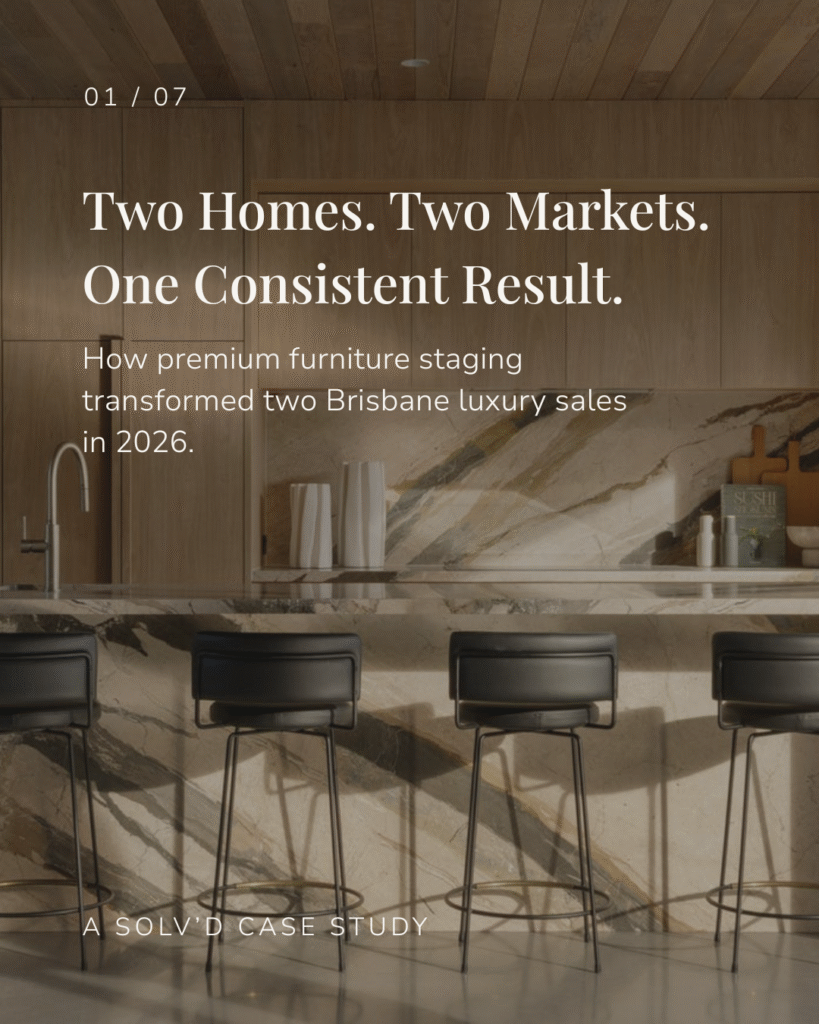
How Premium Furniture Staging Transforms Brisbane Luxury Sales Outcomes

May 18, 2026

A SOLV’D CASE STUDY

Two Properties | Two Outcomes | One Consistent Insight


In Brisbane’s evolving luxury market, the quality of a property presentation doesn’t just change how a home looks, it changes how buyers feel, how fast they decide, and ultimately, what they pay. Premium furniture staging transforms high-end properties into aspirational lifestyle showcases, directly accelerating sales by helping sophisticated buyers emotionally connect with the space.

These two recent luxury sales outcomes exemplify exactly that.


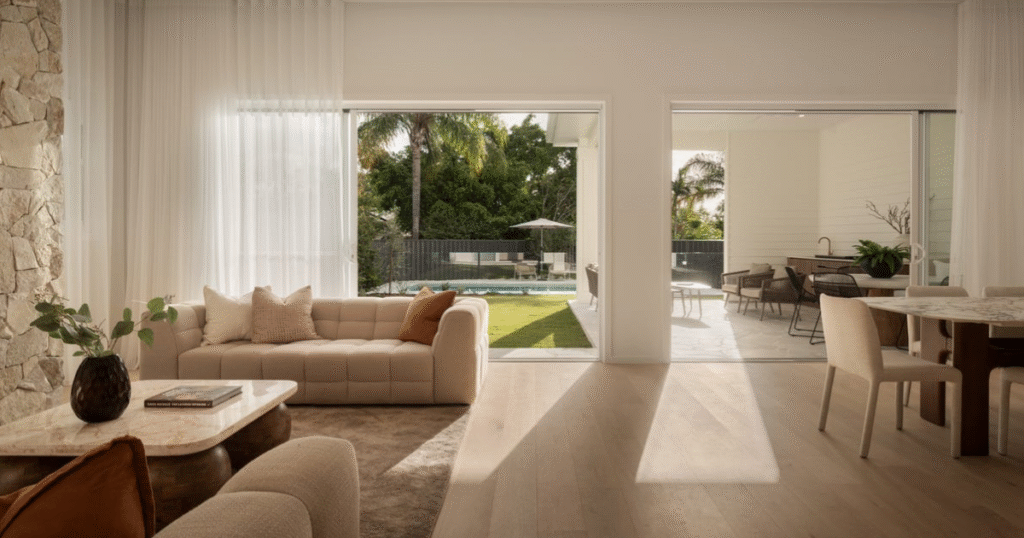
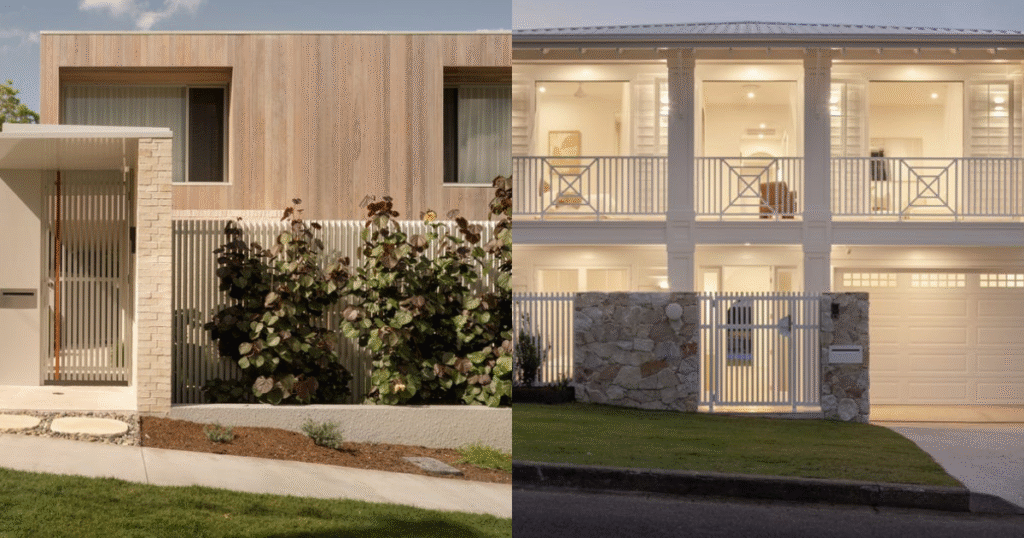
Two multimillion-dollar luxury Brisbane homes that used premium furniture hire to support staging and sales outcomes.

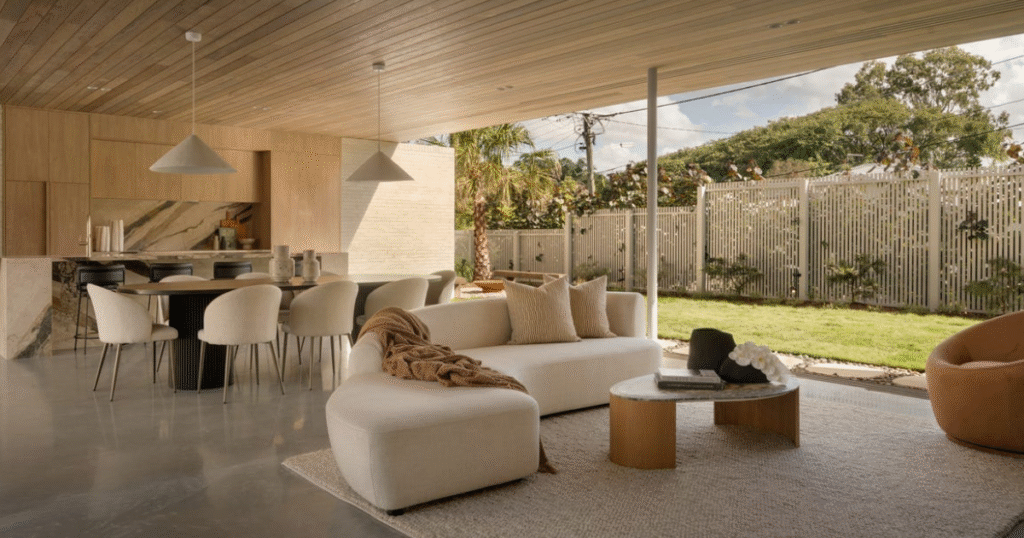
PROPERTY 01

Bardon – Architecture Meets Aspiration

Listed 6 April 2026, this architecturally complex Bardon home went to auction on 2 May and sold 11 May, achieving a 26–30 day campaign window that outperformed the suburb’s median days on market of 37 days, in a suburb experiencing – 3.2% price growth.


ACHIEVED PRICE BAND

$5.8M

Est. Range $3.8M – $4.8M

SUBURB MEDIAN DOM

37 days

Campaign DOM 26-30 days

MARKET CONDITIONS

-3.2%

Softening Growth Trend


This home, the builder’s debut residential project, and the nation’s most viewed property on realestate.com.au in the lead-up to auction, brought with it a wave of national interest that few listings ever achieve. Premium staging played a central role in translating the home’s architectural complexity into an experience buyers could immediately connect with.

In prestige markets, staging operates less as decoration and more as a value translation layer between architecture and buyer psychology. By creating instant spatial understanding and elevating perceived finish quality, the presentation anchored emotional decision-making before auction day, reducing the uncertainty premium buyers typically apply at this price point.


What premium furniture staging delivered:

  • Immediate spatial comprehension of an architectural floorplan
  • Elevated perceived value from a $3.8M–4.8M estimate into the $5.8M achieved band
  • Reduced perceived risk for buyers at a high price point in a softening market
  • Competitive bidding confidence through reduced buyer uncertainty

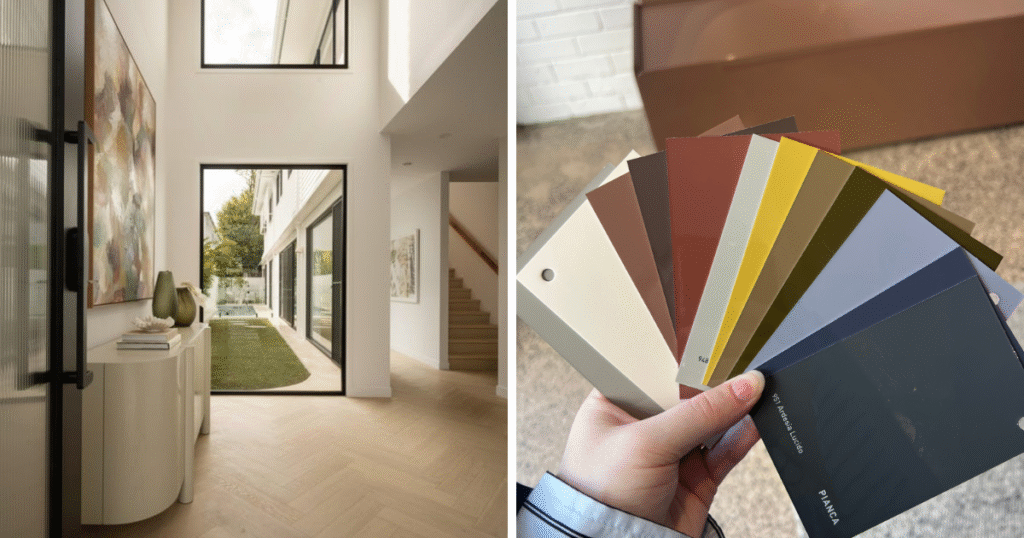
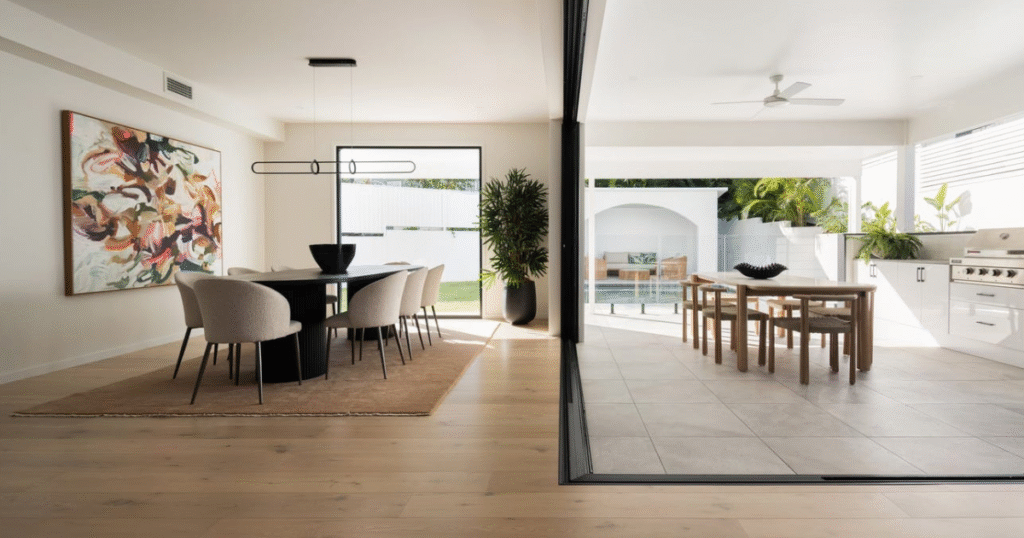
Open living, dining and outdoor alfresco, adorned with premium furniture hire and expert styling to create an aspirational living space.

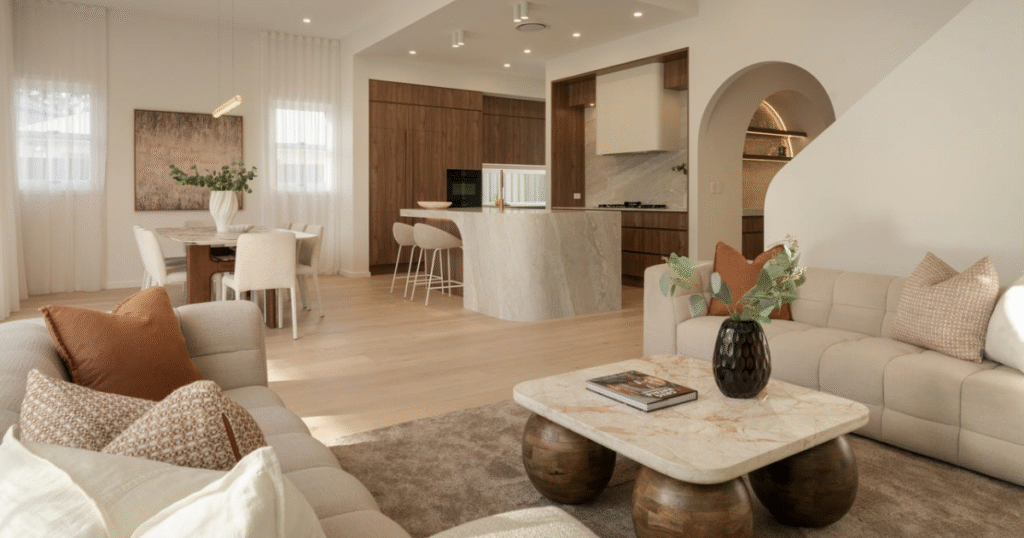
PROPERTY 02

Coorparoo – Speed Compression in Action


Listed early May 2026, this Coorparoo property reportedly sold in 5 days, dramatically outperforming the suburb’s standard 20–35 day cycle, even against high-performing styled homes, which benchmark at 10–15 days. The suburb is experiencing +7.4% growth driven by family upgrader demand and the supply of renovated character, hybrid stock.


DAYS ON MARKET

5 days

Benchmark 20-35 days

ACHIEVED PRICE BAND

$4M

Suburb Median $1.5M-$2M

MARKET CONDITIONS

+7.4%

Strong Growth Corridor


The results in Coorparoo illustrate the property styling wasn’t primarily about luxury signaling, but also generating compression in buyer decision time. The “move-in readiness illusion” created by premium furniture staging meant buyers left the first inspection with an emotional verdict already formed.

Strong presentation removed the need for second inspections, a critical factor in a result this fast. When a buyer can immediately project themselves into a finished, beautifully curated space, hesitation cycles collapse. The outcome shifted from a typical 20–30 day market cycle to what was, effectively, an off-market speed exit.


What premium furniture staging delivered:

  • “This feels finished” perception from the very first inspection
  • Reduced buyer hesitation cycles, critical in achieving a 5-day result
  • Eliminated need for second inspections in most cases
  • Accelerated absorption in an already high-demand inner-east suburb

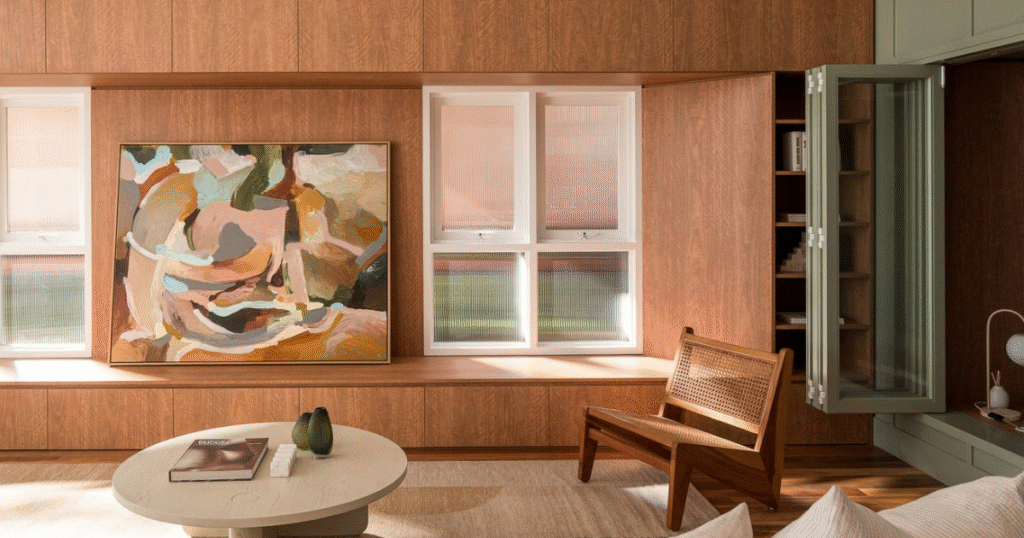
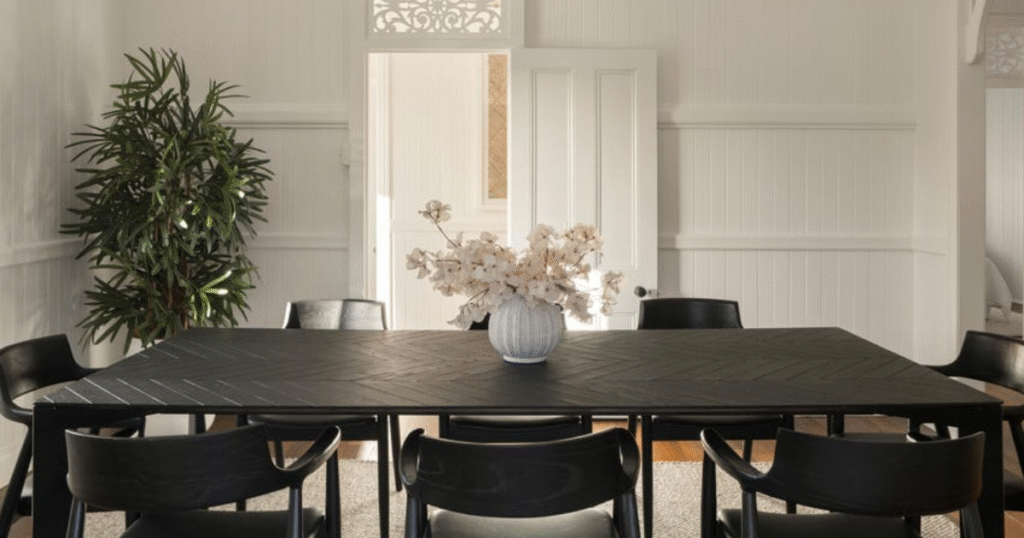
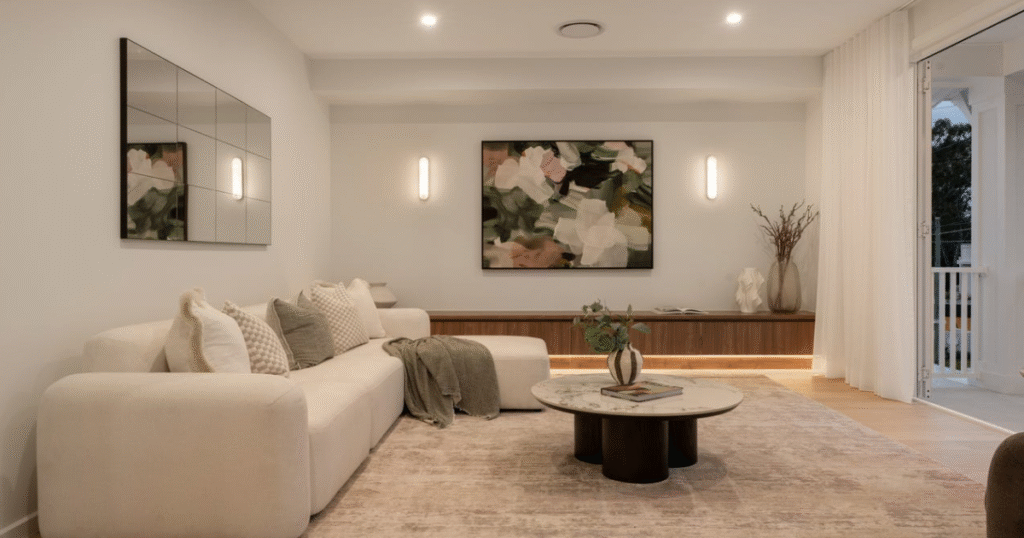
An open concept living and dining area, defined by rich walnut finishes and architectural curves.

The Consistent Thread


Across both properties, premium furniture hire and expert styling operated as a conversion tool between property potential and buyer certainty. Whether the goal was price maximisation or rapid sale, the mechanism was the same. Premium furniture staging gave buyers what they most needed, the emotional experience of already being home.

For sellers in Brisbane’s luxury market, the data from these two campaigns makes a compelling case: premium staging is not a cost, it is a strategy.


Supporting Exceptional Property Outcomes in Greater Brisbane

Setting the tone for Prestige? Whether your goal is highlighting architectural nuance, showcasing aspirational lifestyle, or that digital listing “wow” factor, premium staging justifies your multimillion-dollar price point.

If you’re preparing a luxury property for market, premium furniture staging from a trusted partner, is key to achieving exceptional outcomes…

Style with Us →

  • Instagram
  • Facebook
  • LinkedIn

Frequently Asked Questions About Commercial Furniture Hire

Who typically uses furniture hire services?

Furniture hire is commonly used by property stylists, real estate agents, developers, photographers, production companies, event organisers and property investors.


Is furniture hire only for home staging?

No. While home staging is one of the most common uses, furniture hire is also used for film production, marketing shoots, rental properties and events.


Is hiring furniture cheaper than buying it?

For short-term use, hiring furniture is usually far more cost-effective than purchasing it, especially when transport, storage and styling changes are considered.


Where is furniture hire most common in Queensland?

Furniture hire is widely used across Brisbane, Gold Coast, Sunshine Coast and Toowoomba, particularly in property marketing and creative industries.

Commercial furniture hire plays a much larger role than many people realise.

From home staging and property marketing to film production and corporate events, the ability to quickly access curated furniture allows businesses to create environments that feel complete, professional and intentional.

Whether the goal is selling a home, marketing a product or creating a compelling visual environment, furniture remains one of the most powerful tools for shaping how people experience a space.

Related Reading

For a deeper understanding of how presentation influences buyer behaviour, read:
The Complete Guide to Home Staging That Actually Sells Home

This guide explains how staging, furniture, and layout influence buyer perception and sales outcomes.

Filed Under: News Tagged With: airbnb, brisbane, commercial furniture hire, DIY staging, event styling, furniture hire, gold coast, holiday rentals, home staging, luxury sales, million dollar listing, property styling, real estate, set design, short term rentals

SOLV’D PTY LTD
ABN: 33 637 838 950

Ph: 1300 4 SOLVD – 1300 476 583

Email: Hire@SOLVD.com.au

Unit D
150 Dalmeny St
Willawong Qld 4110

Follow us

  • Facebook
  • Instagram
  • LinkedIn
  • YouTube
  • X (Twitter)

© 2026 SOLV'D. All rights reserved.

  • Terms & Conditions of Hire
  • Privacy Policy
  • Terms of Use