
A Refined Approach to High-end Coastal Property Styling
Introduction
Coastal properties present a unique opportunity in property marketing.
Buyers aren’t simply purchasing a home, they’re investing in a lifestyle shaped by light, landscape, and atmosphere. The expectation is different, and so is the emotional response required to convert interest into action.
This is where considered property styling becomes essential. In coastal markets like the Gold Coast, and Sunshine Coast in South East Queensland, success comes from aligning with its surrounding beaches and hinterlands, subtly, yet intentionally.
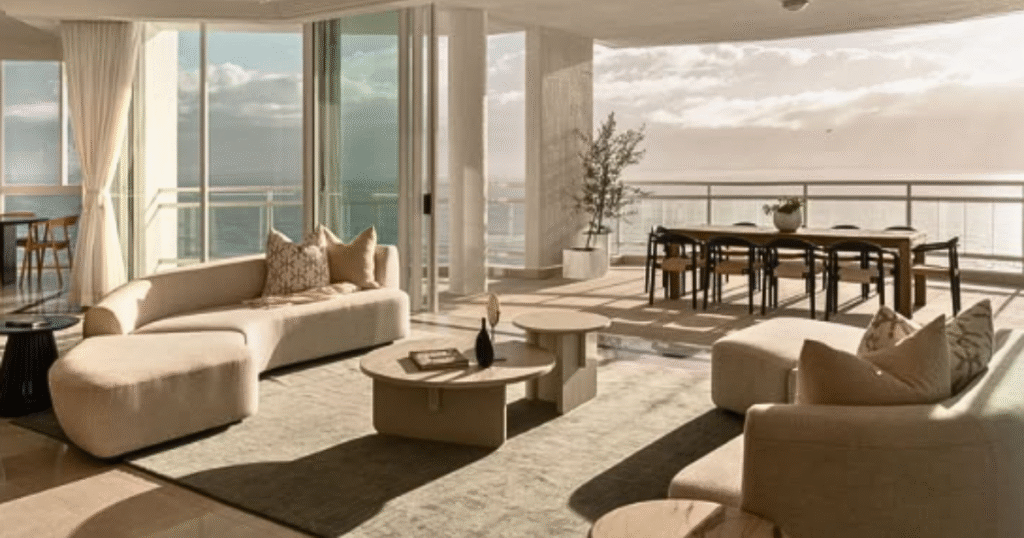
Moving Beyond Coastal Clichés
Effective coastal styling avoids the obvious.
Obvious references, such as nautical décor and ocean themed accessories, can quickly lessen perceived value.
Instead of elevating the property, these literal interpretations risk making it feel over-staged or retail, as opposed to design-led.
Refined coastal interiors focus on:
- Tone over theme
- Materiality and texture
- Atmosphere and light
- Organic statement pieces
This approach ensures the property feels timeless and considered, which are key factors in higher-end coastal markets.
Buyers in the coastal property market are investing in the pinnacle of Australian coastal living, and when it comes to decor, they are not interested in anchors, navy and white stripes or shells. Instead, use high quality art prints, and real greenery to bring the outside in.
Letting the Environment Lead

In coastal properties, the environment is the hero.
Natural light, surrounding greenery, ocean views, and indoor-outdoor flow all contribute to the buyer experience. Interior decisions should enhance these elements, not compete with them.
Selection through furniture hire for stylists + agents should:
- Sit comfortably within the space
- Allow sightlines to remain open
- Support, rather than interrupt, the connection to outdoors
In contrast to more urban markets like Brisbane, where interiors often carry more visual weight, coastal styling benefits from a lighter touch. The more assertive the environment, the more restrained the styling should be.
Texture Over Theme
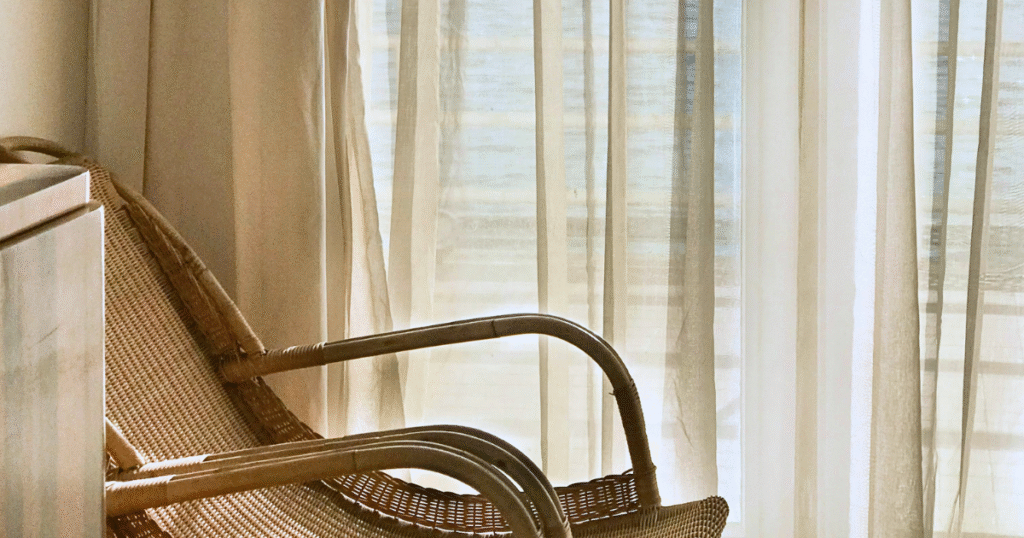
Texture is where coastal styling becomes both sophisticated and emotionally engaging.
Rather than relying on decorative motifs, such as corals and nautical ropes, high-performing coastal interiors use layered materials to evoke the environment indirectly:
- Linen and soft textiles → lightness and movement
- Timber and rattan → warmth and natural grounding
- Stone and ceramics → subtle connection to shoreline
- Sheer window treatments → maximise natural light and air flow
These materials create a tactile, lived-in quality that feels authentic, rather than constructed.
Well-curated staging furniture hire collections play a key role here, providing access to pieces that feel relaxed yet elevated, without appearing overly styled.
A Palette Drawn from Landscape
Colour in coastal properties works best when it feels like an extension of the surroundings.
Instead of stark whites or high contrast palettes, refined schemes lean toward:
- Warm, tonal whites
- Soft beiges and sandy neutrals
- Muted blues/greens and earthy undertones
These tones reflect the natural environment and create a seamless transition between interior and exterior spaces. Adopting a softer palette inspired by sand, fog and seafoam, embraces the atmosphere.
The result is a property that feels cohesive, calm, and visually expansive.
Creating a Lifestyle Narrative

Ultimately, buyers in coastal markets are responding to a feeling and purchasing an aspirational lifestyle.
They are drawn to spaces that suggest:
- Ease and openness
- Relaxation without compromise
- A quieter, more refined version of luxury
Styling should support this narrative without overstating it.
This means:
- Avoiding overcrowding or over-layering
- Prioritising flow and negative space
- Selecting furniture that feels intentional
Through thoughtful property styling, and curated furniture hire, the home becomes more than a structure, it becomes a representation of the life the buyer wants to step into.
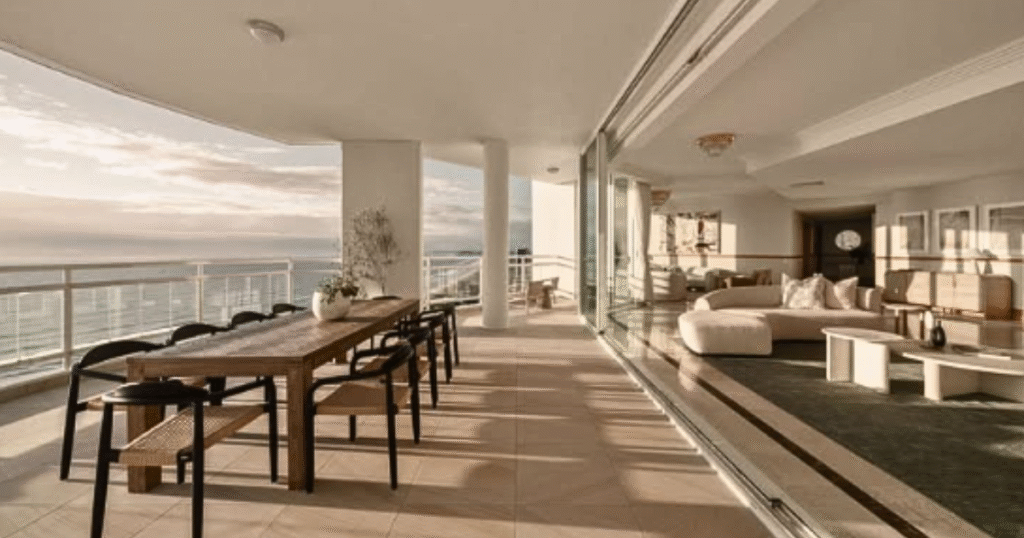
Final Thought
Refined coastal styling is grounded in atmosphere and perception.
It’s about creating a space that feels aligned with its environment. Where materials, palette, and form work together to support both the property and the lifestyle it represents. Particularly in high-end markets, this is defined by ease and elegance.
In growing coastal markets like the Gold Coast, this level of consideration can significantly influence how a property is perceived, and ultimately, how it performs.
Style Coastal Projects with Intention
As we expand into the Gold Coast market, we’re working closely with stylists, agents, and developers to provide furniture solutions that align with coastal architecture, lifestyle positioning, and buyer expectations.
If you’re preparing a coastal property for market and want a considered, collaborative approach to styling, we’d love to be involved.
Frequently Asked Questions About Commercial Furniture Hire
Who typically uses furniture hire services?
Furniture hire is commonly used by property stylists, real estate agents, developers, photographers, production companies, event organisers and property investors.
Is furniture hire only for home staging?
No. While home staging is one of the most common uses, furniture hire is also used for film production, marketing shoots, rental properties and events.
Is hiring furniture cheaper than buying it?
For short-term use, hiring furniture is usually far more cost-effective than purchasing it, especially when transport, storage and styling changes are considered.
Where is furniture hire most common in Queensland?
Furniture hire is widely used across Brisbane, Gold Coast, Sunshine Coast and Toowoomba, particularly in property marketing and creative industries.
Commercial furniture hire plays a much larger role than many people realise.
From home staging and property marketing to film production and corporate events, the ability to quickly access curated furniture allows businesses to create environments that feel complete, professional and intentional.
Whether the goal is selling a home, marketing a product or creating a compelling visual environment, furniture remains one of the most powerful tools for shaping how people experience a space.
Related Reading
For a deeper understanding of how presentation influences buyer behaviour, read:
The Complete Guide to Home Staging That Actually Sells Home
This guide explains how staging, furniture, and layout influence buyer perception and sales outcomes.